

Choosing the correct shipping container depends on the size, weight, loading method, and type of cargo being shipped. This guide provides general container specifications for the most common equipment used in international sea freight.
Please note that container dimensions and payloads may vary slightly depending on the shipping line, container manufacturer, and equipment available at origin. For heavy, oversized, refrigerated, dangerous goods, or project cargo, we recommend checking with our team before booking.
General purpose containers
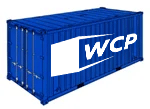
General purpose containers, also known as dry containers, are the most commonly used equipment in sea freight. They are suitable for most general cargo, including cartons, pallets, machinery, household goods, and non-temperature-controlled products.
20ft general purpose container
A 20ft container is often used for heavier cargo, smaller shipments that require a full container, machinery, building materials, tiles, equipment, and dense goods.
40ft general purpose container
A 40ft container is commonly used for larger volume cargo, household goods, furniture, cartons, retail goods, and palletised shipments.
High cube containers
High cube containers are similar to standard dry containers but provide extra internal height. They are useful when cargo is tall or when additional cubic capacity is required.
20ft high cube container
The 20ft high cube container provides extra internal height compared with a standard 20ft container. It can be useful for shipments where the cargo is not long enough to require a 40ft container but needs more height than a standard 20ft unit.
40ft high cube container
The 40ft high cube is one of the most commonly requested container types for general cargo because it offers more volume than a standard 40ft container.
When to use a high cube container
A high cube container may be suitable for:
- Furniture
- Tall machinery
- Light but bulky cargo
- Retail stock
- Household goods
- Cargo where extra height is required
High cube containers are subject to availability depending on the origin, destination, and shipping line.
| Container Type | Internal Dimensions (L x W x H) |
Door Opening (W x H) |
Cubic Capacity | Cargo Weight | |
|---|---|---|---|---|---|
  |
20FT General | 5.89 x 2.35 x 2.36m | 2.33 x 2.26m | 33m³ | 21,700kgs |
| 20FT High Cube | 5.89 x 2.35 x 2.69m | 2.33 x 2.59m | 37m³ | 21,700kgs | |
 |
40FT General | 12.05 x 2.35 x 2.36m | 2.33 x 2.26m | 66m³ | 26500kgs |
| 40FT High Cube | 12.05 x 2.35 x 2.69m | 2.33 x 2.59m | 76m³ | 26500kgs |
Open top containers
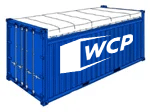
Open top containers are used when cargo cannot be loaded through standard container doors or when the cargo needs to be lifted into the container from above.
They are commonly used for machinery, steel, industrial equipment, and over-height cargo.
When to use an open top container
Open top containers may be suitable for:
- Cargo loaded by crane
- Over-height cargo
- Heavy machinery
- Industrial equipment
- Cargo that cannot be safely loaded through the container doors
If the cargo exceeds the container height, special approval and out-of-gauge charges may apply.
| Container Type | Internal Dimensions (L x W x H) |
Door Opening (W x H) |
Cubic Capacity | Cargo Weight | |
|---|---|---|---|---|---|
  |
20FT Flat Rack with sides |
5.89 x 2.35 x 2.23m | Side Opening W – 2.59m |
30m³ | 26500kgs |
| 20FT Flat Rack without sides |
6.00 x 2.35 x 0.23m | 33m³ Max Height 2.36m |
23500kgs | ||
| 40FT Flat Rack with Sides |
12.05 x 2.35 x 2.23m | Side Opening W – 11.66m |
63m³ | 3600kgs | |
| 40FT Flat Rack without sides |
12.20 x 2.35 x 0.65m | 67m³ Max Height 2.36m |
39000kgs |
Flat rack containers
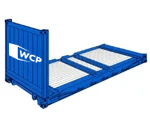
Flat rack containers are used for cargo that is too wide, too high, too heavy, or too difficult to load into a standard container. They have no fixed side walls and are commonly used for oversized or project cargo.
Flat racks are often used for:
- Boats
- Vehicles
- Machinery
- Construction equipment
- Generators
- Industrial cargo
- Oversized crates
Important note for flat rack cargo
Flat rack cargo usually requires additional checks before shipment. The shipping line may ask for cargo dimensions, weight, photos, lifting points, lashing points, and a loading plan.
Out-of-gauge cargo may also require special approval from the shipping line, port, and inland transport provider.
| Container Type | Internal Dimensions (L x W x H) |
Door Opening (W x H) |
Cubic Capacity | Cargo Weight | |
|---|---|---|---|---|---|
  |
20FT Open Top | 5.89 x 2.35 x 2.36m | 2.33 x 2.29m | 32m³ | 21700kgs |
| 40FT Open Top | 12.05 x 2.35 x 2.36m | 2.33 x 2.29m | 66m³ | 26500kgs |
Refrigerated containers
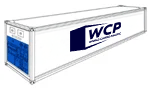
Refrigerated containers, also known as reefers, are used for cargo that must be kept at a controlled temperature during transport.
They are commonly used for:
- Frozen food
- Chilled food
- Dairy products
- Meat and seafood
- Fruit and vegetables
- Chocolate and temperature-sensitive products
- Certain pharmaceutical or specialist cargo
For refrigerated cargo, the following details should be confirmed before shipment:
- Required temperature setting
- Whether the cargo is chilled or frozen
- Ventilation requirements
- Humidity requirements, if applicable
- Whether the cargo needs to be pre-cooled
- Commodity description
- Packaging type
- Loading and delivery instructions
Reefer containers must usually be connected to power before loading, during terminal handling where available, and throughout the sea voyage.
| Container Type | Internal Dimensions (L x W x H) |
Door Opening | Cubic Capacity | Cargo Weight | |
|---|---|---|---|---|---|
  |
20FT Reefer | 5.44 x 2.26 x 2.24m | 2.26 x 2.20m | 27m³ | 21700kgs |
| 40FT Reefer | 11.55 x 2.26 x 2.24m | 2.26 x 2.20m | 58m³ | 25000kgs |
Container weight and road limits
The maximum payload of a container is not always the same as the legal weight allowed on the road.
Even if a container is technically able to carry a heavy load, road transport limits may restrict how much cargo can be moved by truck. This depends on the country, local road regulations, axle weight limits, and the type of transport equipment used.
For heavy cargo, please check with us before loading. We may need to confirm:
- Cargo weight
- Container tare weight
- Total gross weight
- Loading location
- Delivery location
- Type of truck required
- Whether permits are needed
This is especially important for heavy 20ft containers, machinery, tiles, stone, building materials, batteries, and dense cargo.